Showing posts with label Cathedral. Show all posts

Sunday, November 06, 2011

Day 92. Bordeaux Nov 6 2001

We woke early, the cold making it hard to sleep. We paid the fee for another night and the owner of the campground asked if we were not afraid of the cold. I answered that we were but what other choice did we have?

The cold was too intense, too all encompassing in its icy embrace, so we had decided to leave. But to were? We had resolved to catch a train to a warmer climate. But how far could we go and could we keep our bikes with us? Despite the pain, emotional and physical, that they had caused us, we have become emotionally, almost spiritually, attached to them and leaving them behind would radically alter the tenor of our trip.

Our first stop today was the train station, rising from the city like a fabulous 18th century hall, classical statues and carvings coating its facade. We walked through in the wrong direction and found ourselves on the platforms leading to trains, illegally without tickets. We hurried back into the terminal and found the office and waited for our number to be called. We found out the price of a ticket to Rome but we couldn’t take our bikes. The nearest we could take out bikes was Nice, so we found out the price for that as well. Then we found a nearby bank, changed some money into francs and went for a walk to contemplate what to do with our immediate future.

We walked at random and hence managed, without plan, to see some of the more important sights in Bordeaux. We walked along the quay that looked over the Garonne River. We passed the School of Fine Arts, ironically in one of the ugliest buildings we had seen anywhere. We came to the Pont De Pierre, the elegant bridge that leads into town. It terminated at a roundabout in front of the colossal Port des Salinieres, a massive arch that was lost amid the bustle of traffic and the buildings that rose above its height to either side.

We passed the Chamber of Commerce and the Customs House, two awesomely beautiful buildings with intricately carved stonework and gold gilding on all the ironwork. It wasn't hard to see where there was wealth. The customs museum, displaying seized goods of many crimes was tempting but somehow it seemed wrong to pay to see illegal hides or tusks from endangered animals. No one should profit from their suffering.

We ended our tour of the riverfront at the Esplanade des Quinconces, laid out in 1820. We looked forward to it eagerly. The towers at the at the gates were the most elegant things yet seen in Bordeaux, the lamp posts that crowned the surrounding wall were cast iron in a nautical theme with black iron bows of ancient triremes projecting from them.


But the square had hosted a fair the day before and piles of garbage rose higher than our waists. More worrying still was the line of grim looking riot police, plastic shields and batons in hand blocking a corner of the square while old women shouted at them. We left, if not hurrying then at least walking briskly.

Still we stopped at the monument to the Girondins at the head of the Esplanade. A beautiful, allegorical fountain of the Republic and Concordia being pulled through the ocean by straining sea horses sprayed the air with a fine mist while a column topped by an unidentified statue rose halfway to the sky.


From here we walked to the Cathedral, but it was closed for lunch so we circled around behind city hall and ate our lunch in the Jardin de la Mairie. The garden was beautiful, the iron fence gilded in gold with the coat of arms of the city prominently displayed, a fountain circled by flowers that seemed to thrive despite the cold, the whole thing flanked by the Museum of Fine Arts on either side, children playing enthusiastically at one end.

We returned to the Cathedral. It was an indescribable edifice, vastly gothic with twin towers over the main entrance looking demonic with their angled sharpness and smooth seductive curves. Inside, the high ceiling curved above us in cavernous silence while the vast rose windows glowed.


The bell tower wasn’t connected to the church itself and its great shape, a spike slammed deep into the ground could sometimes be seen peering through the windows. I left Heather inside sketching while I phoned home.


When she was done we walked again and found the Museum of Aquitaine. We had planned to go tomorrow but thought we could run through it in the two hours it was still open. The museum was, so far at least, by far the best thing of Bordeaux.

It began with an exhibit of the areas prehistory, the many axes, knives, spearheads, arrowheads, left by prehistoric man. Here were some of the early "Venus" representations, these ones carrying a crescent in their hands and were carved into rock. A representation of the cave paintings at Lascaux adorned the walls and simulacra of ancient painted deer raced across simulacra of ancients cave wall.

There was a small exhibit of Greek and Roman pottery then a vast gallery to the Roman occupation. Elegant classical statues stood vigils over cracked mosaic floors.


There had been a major temple to Mithras here and many, many gifts to the god had been among the finds. The coins of the Bordeaux horde were spilled out in a casual pile, making it easy to see the amazing thickness and weight of the things, while the more spectacular items were showcased in a well lit tray.


Then came the section of the middle ages, with the capstones of columns and many medieval sarcophagi. Then stunningly, amazingly, the entire remains of a vast rose window mounted against a wall, a great wheel of intricate stone whose weight oppressed the room.


But more still, the era of revolution and the many republics with elegant clothes, beautiful jewelry and legacy of headless French. Then the modern era, then post modern, a display of life in the countryside and the collections from Oceania and the far north of Canada and finally a CBC sponsored exhibit about Quebec. Too much to see and displayed in the best fashion we had seen.

We left at closing, found an internet cafe, emailed, went home and got drunk on bordelais wine.

Next Entry: Day 93. Bordeaux
Previous Entry: Day 91. Gradignon

Monday, October 24, 2011

Day 79. Marans. Oct 24 2001.

I woke today from the best sleep I've had in a while, since well before this trip. The greatest gift a person can have is the gift of perfect sleep. What I woke to was less encouraging. A storm raged outside our window. Sheets of rain pounding on terra cotta rooftops and lightning igniting the walls of our room in arcs of electric blue to be followed by a thunderous boom that made the panels of our ancient dresser rattle like old bones. It was beautiful to behold, all the more so behind solid walls around which we could hear the howl of the wind and not feel it.

I listened to the storm for a time that seemed almost frozen, wrapped in warm blankets next to my sleeping wife, listening to a downpour of water that a few nights before would have sent me scrambling for earplugs and something to block the single leaky Velcro strap at the top of the tent. I tried to figure the time from the depths of the darkness at the window and calculated it to be three or four in the morning, plenty of time to slip back beneath the warm covers ands regain my beautiful sleep…and the alarm went off!

We rose and dressed with languid disregard for the time, despite the long distance to be covered. We had no desire to leave. Eventually, despite our reluctance, we slowly filtered down the wooden stairs, paid for our lodgings and got our bikes from the filthy garage. The rain still dripped periodically as we loaded our luggage and as we set out, making us none too eager for the road.

We cycled listlessly at first, as if by leaving half heartedly we could preserve the comfort of the room behind us. But the sun soon came out, driving the rain away and our strength picked up in an old familiar rhythm.

We had not gone long before I noticed a strange grey shape. Unexpectedly a menhir loomed into view, an ancient site marking…what? We cycled in close. An old, obviously seldom used, gravel path led out to the menhir. The menhir was somehow beautiful in its ugliness, standing upright in a circle of red gravel ten feet beyond where the path gave out.

It rose grey and monolithic to the sky, which changed from white to blue as we watched in awe. The lichen crusted skin only added to the surreal atmosphere of the stone. Standing not a hundred yards from a major highway we were transported to another, far older, world.


Then we noticed huddling in the shadow of the menhir before us a second, smaller, stone, the second point in a broken triangle. They were the Menhirs of Plessis, all that remained of an equilateral triangle of stone raised before the conquest by Rome. One, the first, rose seven and a half meters while the second squatted toad-like at a mere 3 and a half. The third had been destroyed in some unnamed accident almost a hundred and fifty years ago.

Ironically enough a modern power line ran nearby, as if mocking the ley lines that some believe were marked by the menhirs.

Returning to the road was almost like time travel, rejoining the century we had left behind, cars rushing heedlessly forward while the rocks stayed, silent and unchanging. The trucks honk again as they pass us and we have reached a new conclusion. They are honking even as they cross over into another lane to give us as wide a berth as possible. It is possible they are not honking angrily at us to get off their road but instead giving us ample warning so we will not be shocked as they barrel by or so we won’t be caught in the current of wind they pull behind them like the wake of a ship. It is preferable to think that they are being kind whatever the case may be.

We continued on and welcomed the arrival of flatter country. The sea was still some distance away but the terrain was flat, the wind was at our backs and we arrived at our halfway point of Lucon far earlier than we had expected. We bought lunch and cycled to the cathedral to eat.

From the outside I must say that Notre Dame de Lucon was very ugly indeed. There was a fine facing and large gothic windows, a series of rising Doric, Ionic and Corinthian columns and a spire that looked as though it could touch the clouds. But generations of rain and wind had worn delicate carving to nothing and years of neglect had eroded any beauty to a hideous mockery of it’s former self, like an old hag who can see echoes of the beauty she once was in the wrinkles of her face. There was little to entice us in. Even the monastery rose like an ancient growth from the cathedrals side, its conglomeration of architectural styles more like a cluster of cancerous cells than a thing of beauty. But we went in, more to find shelter from the cold breeze that had sprung up than from anything else.


Inside lived up to our expectation and yet did not. It was ugly, falling apart in a fashion that makes the word dilapidated kind. But every niche was full. There were statues of St. Joseph, Christ and Joan of Arc. There were paintings; Christ on the cross, our lady of Lourdes, a dozen others. There were also marble testimonials to cures or prayers granted. All this transformed a decayed look to a lived in look, from dead to well used. This was the first church in which I had seen testimonials to St. Joseph for his intervention. Mary gets all the press.

We found the door to the cloisters and filled out in silence. The cloister was almost flooded in the middle. Last nights rain too much for the medieval structure. But it was from here that the cathedral looked best, its spire echoed many time over in points rising above each stained glass window.

We returned and discovered the cathedrals pride and joy; an ancient lectern, colours fading, from which Cardinal Richelieu had preached between 1606 and 1623, his years as bishop of Lucon.

 
Turning back we saw Lucon's second pride, a great pipe organ, a gift from Napolean III, rising like a curtain of silver, filled the back of the cathedral. One could only reach it on a bridge from the monastery.

Outside the day had turned colder, more than once I have been tempted to steal candles from a church, but we set out none the less. We had entered the region of the wetlands, a flat stretch of France in the grassy armpit beneath the peninsula of Brittany and the Pays du Loire. It was flat and so we liked it but the wind was harsh. Heather rode before me, her bike tilted at a constant pitch of 5 of 10 degrees just to match the wind. Everywhere were massive fetid channels into which the marsh drained, channels that flowed with the speed of sludge towards an eventual rendezvous with sea. Cows stood at the edge of the canals and stared forlornly across, as though the draining of the marches had happened overnight, leaving them trapped on islands that they could not understand.

Marans was one, actually a series of many, such islands, titleling itself “The Green Venice.” Better than “The City With Sewers that Never Drain.” The place where we pitched our tent was so damp and muddy that I was ready to believe the cows; the marches had only been drained yesterday. The host at the campground was very excited to see us. He ran out from where he was helping city workers dig up the water mains and talked to us most excitedly in English. He followed us around our site giving a running commentary on our fellow campers and even looked ready to pitch our tent with us. I followed him back to his office to talk to him.

He was enthusiastically helpful, calling ahead to campgrounds he thought would be open and fuming angrily at the phone when no one answered. He was very vocal. I showed him my Michelin guide to camping and he snorted “Oh, it is shit!” I asked him about the work being done at the campground and he said “Oh, those government guys, they are shit!” He wanted to talk about the weather and said “Oh, it is shit!” Finally he told me that he had to go, he was meeting with a government minister about getting the work done. “Oh,” he said “He is an asshole.” I can guess which first words he learns in any foreign language.

Setting up tent was a strange and unsettling experience. After all the effort cleaning it sinking our fabric home into a hillside of mud seemed almost like a desecration. A small canal ran just behind our tent, a thick soupy green, and it was hard to believe that it was not more solid than the slippery ground beneath us. Our tent pegs sunk in so easily they almost disappeared beneath the earth and when we sat down on our sleeping bags the ground shifted around like a waterbed beneath our bodies. At least it was comfortable, but I miss the solidity of four wooden walls and the convenience of a shower in the room. One stop at a hotel and you’re ruined.


Next Entry: Day 80. La Rochelle
Previous Entry: Day 78. Talmont St. Hilaire

Saturday, October 15, 2011

Day 70. Nantes. Oct 15 2001.

We woke up today to a beautiful blue sky, no rain clouds in sight. I turned to Heather and said “look, blue sky” and rain clouds rolled in and opened up. Never, ever, ever, comment favorably about the weather!

But after a day inside yesterday we were definitely going to explore Nantes. First on our list: La Musee des Beaux Arts and the Picasso Exhibition. We had not expected the school children! We walked the distance to the museum and even followed one of the classes as they marched resolutely to the entrance. But the museum was still closed when we got there and stairs were crowded with youngsters so we decided to walk around the building first.

To the side we found broken stone sculptures, as if they had been cast out the back door to crumble and rot as mold and greenery ate them away. One was a mother and child, her arms shattered by an ancient calamity, so her babe hung precariously on her knee. The other was an angel, buffeted in the wind, his arm severed at the shoulder in a ragged stump. We returned to the front to find that the children had not dispersed but that the doors were open. We waded through a sea of young faces to buy our tickets.

Our first stop was the main display, Picasso La Peinture Seule, a series of works that had not been displayed since just after his death, the works from the final decade of his life. Picassos’ work, for me at least, is a strange mixture of perfection and grabage. His was a lifelong struggle to find beauty without form, an ideal that he reaches only rarely, one painting out of every hundred. To convey the feeling of a thing, a place, a person, without recourse to the fragile shell that makes its form, is to understand it as well as its creator, and that is a gift handed out parsimoniously.

It seems like Picasso found that ideal once, in a painting from his youth, and spent the rest of his life trying to find it again, his few successes only spurring him to try all the more desperately. Perhaps that accounts for his prolific collection. So many works, so few successes, but those spectacular.

Even more interesting than the works of Picasso was watching the desperation of the teachers as they tried to explain to their classes of eight year olds what his work meant, why he was such a force in the art world and what, exactly, that man in that painting was doing to those women. To their credit the teachers were a lot less flustered than any adult in North America would be in such a situation. They told the children that the couples were making love and left it at that. Our museums would, I think, just ban those paintings.

We left the main floor and climbed to the displays above, surrounding the museums central court. Here we found classics paintings mixed with an exhibit called The Uninterrupted Dialogue. The classics paintings were good. I enjoyed a scene of the eruption of Vesuvius; in fact I enjoyed all the ones that referred to classical myth or history. There was a piece called “The Aftermath of Lucretia’s Rape” where Rome was about to become a Republic that I enjoyed. Also memorable was a composition that was an allegory for the Parisian school of fine arts.

The detail in the women representing Gothic Art and the Art of the Renaissance, respectively, was magnificent and they seemed to shimmer with an internal light. The artist had done a smaller study of them, along with some priests from the main image, and they seemed almost alive.


Paul Delaroche was the artist.
But by far my favorite, and I think Heather’s as well, was “Jeune Fille” by Hippolyte Flandrin. It was a painting of a young woman with downcast eyes, coy and seductive. It was enthralling.
One other painting in the museum really stood out for me, in both a positive and negative fashion. “The Deluge” was an amazing painting, capturing the desperation of those last left alive during the biblical flood. An amazing painting that captured the suffering and the anguish. It also raised the question “How can God claim to be compassionate and yet do this?” A truly awe inspiring piece.

But it was also part of the Museums “Uninterrupted Dialogue” show. The show was meant to show older works reinterpreted through modern eyes and was quite successful. The old must constantly be re-evaluated in the context of the new or it becomes irrelevant. But the “artist” who reinterpreted "The Deluge" had draped the painting with netting filled with stuffed animals, almost totally obscuring the original painting. We only saw the original in a photograph hung next to the work.

Covering and obscuring the work of another artist, in the interests of promoting your own work, seems like one of the most obscene acts an artist can commit. The modern "artist" had a screed posted with the works denouncing the use of nude women in the painting, ignoring the naked men alongside them I suppose. She claimed to be obscuring the original in the name of feminists everywhere, doing more damage than good from my perspective.

We left the musem and went to the nearby Jardin Des Plants, a beautifully manicured garden, to discuss art and feminist theory and feelings without form. We meandered through patterned lawns, past trees and monuments to Jules Verne, and left finding our thoughts in close accord.


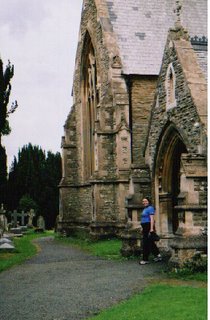
We went through the St. Peter gate and entered the St. Peter and St. Paul Cathedral I had seen the other day.
The inside of the cathedral soared above us, great gothic columns supporting a high ceiling. It was most impressive but cold and empty. The only art was on two tombs, those of the financial supporters of the cathedral. One was surrounded by beauty, justice, virtue and temperance in the shapes of women. But one of the sculptures, we could not figure out which, had a man's face carved in the back of her head. His beard flowing where her hair should be.


Interesting.
Overall the Cathedral and, to a lesser extent, the museum, had left us both feeling a little cold and unsatisfied, as if we had seen a beautiful body with the soul departed. The heart of Nantes seemed to have little heart.
Perhaps there are unforeseen consequences when you cover a river. The River Edre had once cut through the part of Nantes that we visited today, until in had been encased in an underground canal. A river can give a city energy and vitality might encase that power so that it can never be used.
We wandered the streets of downtown, looking for a bookstore. We went into the church of Ste. Croix and found it filled with the homeless and destitute drinking in the pews.


We went into the Palace of the Dukes and found its inside beautiful and closed to the public. It’s history inaccessible.
We walked the forever back to our campsite and found the insides of a tent small consolation after the bleakness of the gloomy day.
Next Entry: Heather's Picasso
Previous Entry: Day 69. Nantes

Wednesday, August 17, 2011

Day 11 August 17 2001

First day of biking. Alone just the two of us now and absolutely terrified. We woke up late and finished off our packing. Audrey and Dennis had made us an enormous English breakfast on which we gorged ourselves not too long after waking up. Then we set out.

Leaving was far harder than I thought it would be. Audrey and Dennis have become surrogate parents to us and leaving was leaving behind everything familiar and safe. We read The Hobbit tonight and Tolkien describes Bilbo as half Took and half Baggins, one adventurous the other homey. Leaving brought out the Baggins in me in spades.

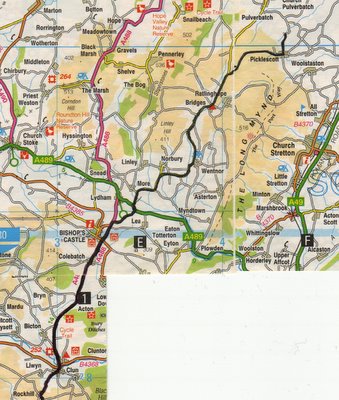
Our journey today can only be described as hard. We traveled up over the slope of the Long Mynd. A road so difficult it was amazing. It was like climbing to clouds. But our descent was pure pleasure, the green hills of England rumpled around us, speckled with the white of sheep, the Devil’s Chair looming up at our side.

We stopped for a rest in Bishops Castle, at the cathedral, and were treated to the melodius sound of the organist practicing.

When we left we were once again faced with an enourmous hill that almost broke us. Our trip down was once again amazing with the Castle of Clun looming like a jagged tooth below us.

When we finally arrived at Clun it was strangely anticlimactic. I had no idea what to do with myself and would have wandered around aimlessly had we not found a map. We followed it to the hostel,, a quaint old mill converted to a travelers rest. It is stone and wood and comfortable and vastly different that I expected. Of course we have a dorm to ourselves, the hoof and mouth disease that has ravaged the cattle of Britain has done the same to the travel industry.

We found on our arrival here that a few things had not happened as planned, most especially my water bottle had broken, filling my backpack with water and drenching my map. But I am tired enough to overlook small problems. Tomorrow we will face the consequences of today and we will decide were to go. I only hope that with experience the fear that knots my belly will diminish.


Next Entry: Day 12
Previous Entry: Day 10