A day of rest before the big push out of here.
It occurs to me how much I have left out in my accounts of Nantes and thought to record a little of it on this day of doing little.
Like how the day before last we went to the little Island of Versailles in the Erdre River and walked through a Japanese style garden in the setting sun, then through a Japanese style building filled with aquariums displaying the aquatic life of the Erdre.
It occurs to me how much I have left out in my accounts of Nantes and thought to record a little of it on this day of doing little.
Like how the day before last we went to the little Island of Versailles in the Erdre River and walked through a Japanese style garden in the setting sun, then through a Japanese style building filled with aquariums displaying the aquatic life of the Erdre.
We walked through slowly, enjoying the tranquility after a long day running around. We ate bananas and listened to a small French boy running frantically through the displays yelling “Vache, Vache!” as he tried to find the model cow that mooed every once in awhile. I don’t think he believed such a loud noise could come from such a small model and he was desperate to find the real cow that must be hidden somewhere in the large building. We ran into his embarrassed mother on the way out.
I see too that I have left out the fact that the street in from of our tent door seems to be a major meeting point for some of the male inmates of the campground. As far as we can determine they live full time in the little tents that surround our site. I found it hard to believe at first, most of the tents are, if anything, even smaller than ours and ours is none too big. They spend most of their time in big groups or in the washroom. At first it was disconcerting to always find them in the washroom but now I am convinced that they are simply longing for solid walls around them for some of the time. They seem to be French Arabs, so I am guessing that they are Algerian, a fact which is pure speculation on my part.
I notice as well that I have left out descriptions of most of the Dobree museum. When I see a place full of beauty I worry that I will run out of space and so describe it only generalities, then find myself with extra space left over. So I will describe a few treasures now. There was the pin in the jewelry collection that stood out, blue knot work in something like enamel. The sides were bordered in glimmering silver and the spaces between the knots filled with pearls and semi-precious stones. I cannot help but wonder what Heather sees when she looks at such a thing. I see a beautiful whole, a piece of jewelry but not much more. She must see the hours of painstaking work that created the piece, the art and the learning behind it.
Another big item in the Dobree museum that deserves description is the anniversary chest from the 17th century. A chest of drawers that folded out into three panels with stunningly elaborate drawings on the two folded out panels and a series of drawers in the center. The left panel held a painting of Constantine at the battle of the Milvian Bridge. The right was a painting of St. Louis, King of France and his marriage to someone whose name we have both forgotten. Each drawer in the center was decorated with a beautiful painting depicting a pious event in the life of a French king. At the bottom was a small slide out table. The wood was a dark mahogany and the whole thing exuded tranquility and peacefulness that no mere object should have. It was very beautiful and had only recently been restored to its original condition. It had pride of place in its own exhibition, in an alcove near the stairs on the second floor.
The final thing left to describe in the Dobree was the rather unique collection of medieval sablieres, I don’t know the English translation for them. They are the pieces of wood that line and important transition part of a structure. The ones in the Dobree collection were intricately carved with faces, each grimacing in some bizarre fashion at the face next to it, sticking fingers that appeared out of nowhere up noses and into ears, stretching lips apart to make inaudible rude noises or to stretch out an impossible long tongue. Heather particularly enjoyed one carving, of the way a woman prepares her husbands dinner. It was a grotesque carving of a woman peeing into a pot while her husband waited hungrily in the next room. Some people are really sick.
Today itself has been relatively uneventful. The only big ticket item on the agenda was getting our laundry done. Doing laundry in France is expensive, in the way that buying new clothes at home would be expensive. We wash things by hand but then we are reliant on the weather to dry things and "weather" and "reliant" are words that mix like oil and water. My hands are calloused from incessant wringing and my biceps are stronger than they have ever been. Forget expensive gyms and personal trainers, forget buying a washing machine and dryer, simply combine the two and save money.
We are trying to clears things out of our tent in preparation for tomorrow. Everywhere we stop we accumulate things, especially pamphlets on the region, and they get cluttered around the inside of the tent. We are trying to be like the proverbial rolling stone, but a lot of little nooks and crannies offer places for moss to grow and when we try to shake it free we only create chaos for ourselves.
It will be hard to leave Nantes. For the last part of the trip we have had immediate, nearby, goals. Cherbourg to St. Michel’s, St. Michel’s to Rennes, Rennes to Nantes. But now our next stop is essentially Bordeaux. It is almost as though we are following a track that has disappeared. We are going to follow a line made by connecting the dots of open campgrounds. It will take us out of our way but it will be easier and more certain.
I think.
Clouds are rolling in tonight, endangering our fresh laundry. Even as we pull in the clothes the clouds break and a storm dumps down. For the first time lightning lights the sky. At first we wait for the flash with a kind of wonder, but it soon draws neared, until the clap of thunder seems to come a split second before the flash and all the lights in the city blink out in sympathy.
Then we pull the comforting hoods of our sleeping bags over our heads and bury ourselves in warmth and security and a smell we will have to wash out soon.
I see too that I have left out the fact that the street in from of our tent door seems to be a major meeting point for some of the male inmates of the campground. As far as we can determine they live full time in the little tents that surround our site. I found it hard to believe at first, most of the tents are, if anything, even smaller than ours and ours is none too big. They spend most of their time in big groups or in the washroom. At first it was disconcerting to always find them in the washroom but now I am convinced that they are simply longing for solid walls around them for some of the time. They seem to be French Arabs, so I am guessing that they are Algerian, a fact which is pure speculation on my part.
I notice as well that I have left out descriptions of most of the Dobree museum. When I see a place full of beauty I worry that I will run out of space and so describe it only generalities, then find myself with extra space left over. So I will describe a few treasures now. There was the pin in the jewelry collection that stood out, blue knot work in something like enamel. The sides were bordered in glimmering silver and the spaces between the knots filled with pearls and semi-precious stones. I cannot help but wonder what Heather sees when she looks at such a thing. I see a beautiful whole, a piece of jewelry but not much more. She must see the hours of painstaking work that created the piece, the art and the learning behind it.
Another big item in the Dobree museum that deserves description is the anniversary chest from the 17th century. A chest of drawers that folded out into three panels with stunningly elaborate drawings on the two folded out panels and a series of drawers in the center. The left panel held a painting of Constantine at the battle of the Milvian Bridge. The right was a painting of St. Louis, King of France and his marriage to someone whose name we have both forgotten. Each drawer in the center was decorated with a beautiful painting depicting a pious event in the life of a French king. At the bottom was a small slide out table. The wood was a dark mahogany and the whole thing exuded tranquility and peacefulness that no mere object should have. It was very beautiful and had only recently been restored to its original condition. It had pride of place in its own exhibition, in an alcove near the stairs on the second floor.
The final thing left to describe in the Dobree was the rather unique collection of medieval sablieres, I don’t know the English translation for them. They are the pieces of wood that line and important transition part of a structure. The ones in the Dobree collection were intricately carved with faces, each grimacing in some bizarre fashion at the face next to it, sticking fingers that appeared out of nowhere up noses and into ears, stretching lips apart to make inaudible rude noises or to stretch out an impossible long tongue. Heather particularly enjoyed one carving, of the way a woman prepares her husbands dinner. It was a grotesque carving of a woman peeing into a pot while her husband waited hungrily in the next room. Some people are really sick.
Today itself has been relatively uneventful. The only big ticket item on the agenda was getting our laundry done. Doing laundry in France is expensive, in the way that buying new clothes at home would be expensive. We wash things by hand but then we are reliant on the weather to dry things and "weather" and "reliant" are words that mix like oil and water. My hands are calloused from incessant wringing and my biceps are stronger than they have ever been. Forget expensive gyms and personal trainers, forget buying a washing machine and dryer, simply combine the two and save money.
We are trying to clears things out of our tent in preparation for tomorrow. Everywhere we stop we accumulate things, especially pamphlets on the region, and they get cluttered around the inside of the tent. We are trying to be like the proverbial rolling stone, but a lot of little nooks and crannies offer places for moss to grow and when we try to shake it free we only create chaos for ourselves.
It will be hard to leave Nantes. For the last part of the trip we have had immediate, nearby, goals. Cherbourg to St. Michel’s, St. Michel’s to Rennes, Rennes to Nantes. But now our next stop is essentially Bordeaux. It is almost as though we are following a track that has disappeared. We are going to follow a line made by connecting the dots of open campgrounds. It will take us out of our way but it will be easier and more certain.
I think.
Clouds are rolling in tonight, endangering our fresh laundry. Even as we pull in the clothes the clouds break and a storm dumps down. For the first time lightning lights the sky. At first we wait for the flash with a kind of wonder, but it soon draws neared, until the clap of thunder seems to come a split second before the flash and all the lights in the city blink out in sympathy.
Then we pull the comforting hoods of our sleeping bags over our heads and bury ourselves in warmth and security and a smell we will have to wash out soon.
Previous Entry: Day 71. Nantes


 Nothing with a dome had appeared in the city guides, only spires and turrets. We cycled towards it with cautious enthusiasm. We were well rewarded.


 There was a sword that had belonged to the


 Interesting.

 We walked the forever back to our campsite and found the insides of a tent small consolation after the bleakness of the gloomy day.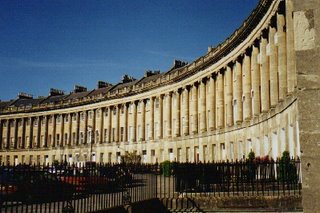
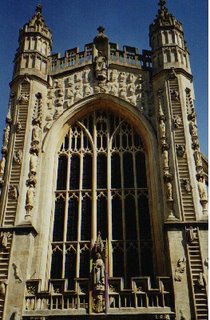 From our wanderings, and after a brief respite at a fast food restaurant to remind us of home, we traveled to the
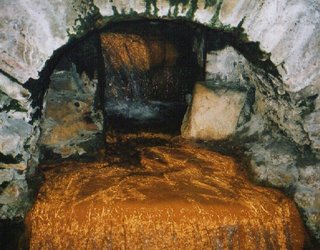
 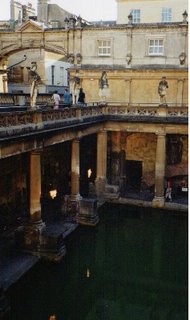 At times we truly stepped back to a time when the bath was a mystic centre of power. When we stared into the outflow of water under its arch, in the blast of heat and the red minerals, it is like you are looking into the mouth of hell.
 The awe of the Romans and the pagan Celts is palpable.
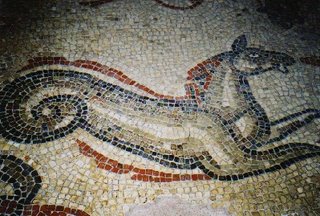 It becomes shocking to see the decadent use the 18th and 19th centuries put the waters too. All that was holy died as the rich bathed their ills.
